EN

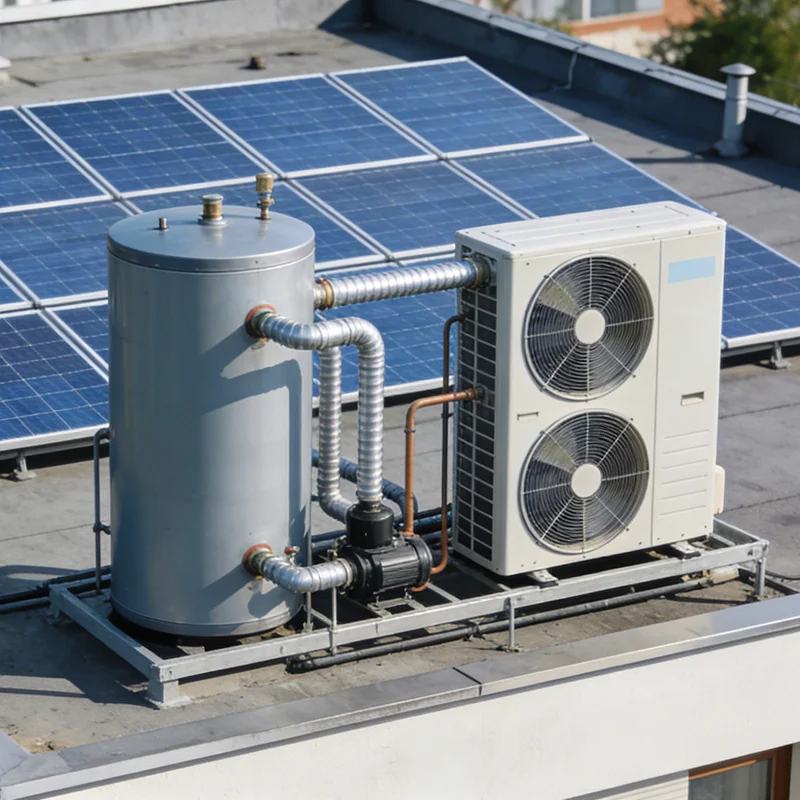
Heat pump systems have become popular choice for homeowners who want to find way to heat and cool their homes in an environmentally friendly and cost-effective manner. Unlike conventional furnaces which create the heat by combusting fuel, heat pumps move heat from another place to the place where it is needed, either capturing heat from the outdoor air, ground or water sources, and moving it indoors in the winter, or moving the heat outdoors in the summer. Their efficiency factor, together with their capacity to supply heating and cooling, make heat pumps perfect solution for modern energy-efficient homes. It looks at the factors to consider when choosing and installing residential heat pump system.
Understanding Air Source Heat Pumps: The Accessible Choice
The most popular and readily available heating and cooling system upgrade for homeowners is an air source heat pump (ASHP). These units remove heat from the outside air, even during cold weather, and bring it into the house. Their popularity is based on their ease of installation and low initial cost, when compared with other types of heat pumps.
The performance of an air source heat pump is usually determined by two performance metrics: Heating Seasonal Performance Factor (HSPF2) and Seasonal Energy Efficiency Ratio (SEER2). The higher the number, the more efficient the model will be, and ENERGY STAR certified models can save about 5% on energy usage when compared to non-ENERGY STAR models. From an operational economics point of view, heat pumps can lead to substantial savings, homeowners who have replaced electric resistance heating have estimated an annual savings of approximately 60% and those who have taken out propane or oil heating have estimated savings from 22% to 74% annually.
The installation of an air source heat pump normally takes between 2 to 5 days depending on factors such as the need to install an outdoor unit (which is similar in size to an air conditioning unit), and connecting the indoor unit to the duct system or to the duct system in individual rooms for ductless systems. This makes ASHPs an ideal choice for many homes that are limited in outdoor space, such as those in urban areas, and retrofits where groundworks would be difficult.
Ground Source Heat Pumps: Premium Efficiency with Higher Investment
Geothermal heat pumps, or ground source heat pumps (GSHPs), are the top of the heat pump technology. Such systems involve the use of buried pipework and/or boreholes to extract heat from the ground, the temperature under the surface of the earth is relatively stable, and is usually around 10°C to 15°C throughout the year.
This is very efficient thermal reservoir, in fact an air source heat pump will deliver about 300% efficiency, ground source system can deliver up to 400% meaning four times the heat per unit of electricity. The average HCP and COP of GSHP system are reported as 4.64 and 6.30, respectively. COP degradation was negligible, at 2.5% in 10 years.
This efficiency is, however, expensive up front. The cost of the installation is usually between £15,000 and £30,000 and involves large amount of horizontal trenching (land use) or vertical boreholes. The installation takes 1-3 weeks and is disruptive. However, the high initial price is the most important obstacle to widespread use of GSHPs, especially in colder climates, where they have the most significant efficiency benefits.
Choosing the Right System for Your Home
There are several considerations to take into account when deciding between air source and ground source heat pumps.
Available space frequently makes the difference. As result of the minimal space needed for the outside unit of the air source heat pump, most residences can benefit from its use. Ground source systems require lot of space outdoors for the ground loops or for the boreholes to be drilled, and may not be possible for smaller land and urban properties.
Climate considerations are also important. ASHPs will have lower performance in colder climates, but GSHPs will remain high-efficient year-round as result of the relatively stable ground temperature. But, modern cold climate air source heat pumps are much better at operating at low temperatures and in very cold weather, and often outperform propane and oil heating on very cold days.
Installation Best Practices and Maintenance
However, the performance of any heat pump system is greatly influenced by the size and quality of installation, which can be more significant than the type of make and model available.
We will perform professional load calculations to ensure that the system is correctly sized for your home, enabling efficient heating and cooling.Too small and will not keep temperature comfortable, too large will run too often which will lower efficiency and shorten the life of the unit. Where the installation is outdoors, the unit should be installed well above the anticipated snow depth, preferably under roof gables, not under eaves where snow can slide over the unit.
Proper refrigerant charging is also important, oversized or undersized refrigerant will decrease efficiency and cause premature failures. Most units are pre-charged for standard line-set lengths, extra charge may be needed for longer line-set runs. Before charging, vacuum testing is required to ensure the system is leak-free and moisture-free.
Maintenance requirements - Heat pumps, which have few moving parts with very durable designs, have relatively low maintenance needs compared to conventional boilers. Most filters need to be cleaned regularly, professionally inspected annually and cleared of air flow obstructions around the outdoor units to achieve peak efficiency throughout the system's service life.
Ultimately, residential heat pump systems provide an outstanding route to energy-efficient home heating and cooling. Air source heat pumps can be low-cost, readily available option for the average homeowner and will offer significant energy savings. Ground source systems offer the greatest reliable performance and cost savings, especially in colder climates, and are the best choice for the person willing to invest bit more initially for maximum performance and efficiency. Either way, it's important to work with trained professionals for the correct sizing and installation to make sure your heat pump system is properly running for years.