EN


For decades, residential heat pumps were not a competitive technology for cold climates, decreasing their heating capacity and efficiency significantly in freezing weather. Thankfully, the technology has been dramatically improved to create CCHPs that the market now recognizes as strong primary heating solutions for the harshest winter climates. Sophisticated compressor design and control, energy management of system operation and automated defrost, all play a role in the efficient and reliable operation of the latest generation cold-climate heat pumps (CCHPs) in temperatures as low as -30°C or less.
Advanced Compressor Technologies for Extreme Cold
The core problem for heating pumps in cold environments is that the vapor compression cycle, on which modern heat pumps work, gets inefficient when working at outdoor temperatures which are very low. The higher temperature of outdoor at very low temperatures increases the ratio in which heating can be compressed to a dangerously high levels for heating efficiency and temperature discharged, for example, conventional single-speed heat pumps typically lose from 60% to 80% more than heat capacity in comparison to 8.3°C when it was measured with -25°C.
A modern CCHP will overcome this design limitation in one of several ways starting with compressor geometry. Tandem (or 2-compressor) design employs two parallel single-speed compressors to achieve Capacity Modulation. Under Cooling operation and to some extent, moderate heating one compressor carries the cooling load, and under the heaviest Heating load, both will be active. These design features enable the unit to achieve minimum heating output at 75% of rated capacity at -25°C, based on a DOE’s Cold Climate Heat Pump Challenge goal, a target intended to define performance limits in colder climates.
Certain devices are equipped with a vapor injection function, whereby an intermediate pressure refrigerant gas is injected into an intermediate section of a compressor. Such vapor injection to improve both mass flow rate and heating capacity has been reported to increase heating capacity by up to 15%, increase COP by up to 9% (all under identical conditions), and the system seasonal performance factor by 5.6-9.1%. Cascade compression systems (switching between cascade and quasi two-stage operations), an example of a even further sophisticated system, achieve a COP of 2.17 at an ambient temperature of-35°C.
The Critical Role of Defrost Management
Outdoor coil will form frost when the outdoor temperature is below -12°C to -1°C and relative humidity is above 45%. Frost will insulate the coil, thereby reducing the capacity of the system by 30%-60%.
Contemporary CCHPs use a reverse-cycle defrost where they switch the direction of refrigerant flow momentarily so that it defrosts the outside coil; otherwise, they differ considerably in the efficiency of defrosting controllers. When the unit is controlled to defrost on a time-and-temperature basis there will be a substantial number of unneeded defrosting cycles, one source put it as 63% of cycles, a COP loss of about 16%.
On more sophisticated levels, sensors on demand defrost systems check when systems actually degrade and cycle for defrost only in the required conditions, cutting the power loss for defrosts from 16% to 7%. Tests in real life situation illustrate some systems will result in decreased supply air temperature (some are as low as 15.5°C) in the case of a defrost, but temperature impact on the rooms tends to be only 0.6°C . Several manufacturers are already featuring smart adaptive defrosts that sense the level of ice on the coil in real time and activate defrost only when necessary to ensure consistent performances.
Hybrid and Quasi-Two-Stage Compression Innovations
Other recent designs focus on the simultaneous operation of various compressor stages and thermal energy storage devices that are driven by compressed work to satisfy heating capacity and defrost performance. The combination of quasi two-stage compression cycle and a phase change thermal energy storage unit with its phase change temperature can make the system performance efficient at these low temperature situations.
Compared to traditional economizer systems, the COPs increased by about 40%, capacity up by 43% and efficiency in terms of exergy efficiency increased by up to 42% at a -30°C ambiance. Daily operational expense is reduced by over 4.6 yuan, about 11% decrease at cold weather conditions. In addition to that, the discharge temperature was reduced as much as up to 12.8°C. This lowers stress of the compressor and improves lifetime.
Innovative three-pressure heat pump models utilizing series-parallel connection of two compressors can realize a number of heating modes and defrost modes, such a system enhances both heating capacity by 20% and the COP by about 3% compared to normal conventional systems, and they can shorten the defrost time by 44.8%, decrease the defrost power by 40.8%, and alleviate remarkably the normal temperature fluctuation induced by the process of defrosting.
Real-World Performance and Infrastructure Benefits
The operation of CCHPs has been proven in over five years of field installations throughout North America , including some of the coldest regions. One field trial was conducted on a tandem-compressor prototype in the interior of Alaska where outdoor conditions became as low as -34°C. It operated with very little resistance heat supplemental to less than 3.2% of the time and with very low temperature defrost penalties.
Multiple cold climate U.S. cities modeled for building energy simulations confirmed significant cost-saving improvements: CCHPs produce 10-20% savings for peak power and 17-26% for annual energy use as compared to single-speed heat pump baselines. Cost savings are more profound in the olders, more inefficient homes and moderate for newer, well-insulated homes due to leveling of cooling and heating demand.
Beyond operational energy savings, CCHPs provide considerable infrastructural advantages. Less efficient heat pumps with resistance backup can be sized 80 Amperes or more when it's cold, which necessitates that building wiring support that current to prevent it from catching fire and that all the breakers and wiring throughout the building handle that 100-amp load; CCHPs, when they achieve higher cold-weather COPs and pull more heavily on resistance back up, can often be supplied at 30 Amperes, and it would prevent peak grid load from moving from summer to winter-and thereby necessitate huge upgrades to transmission and generating infrastructure to the tune of over $1,000 per kW.
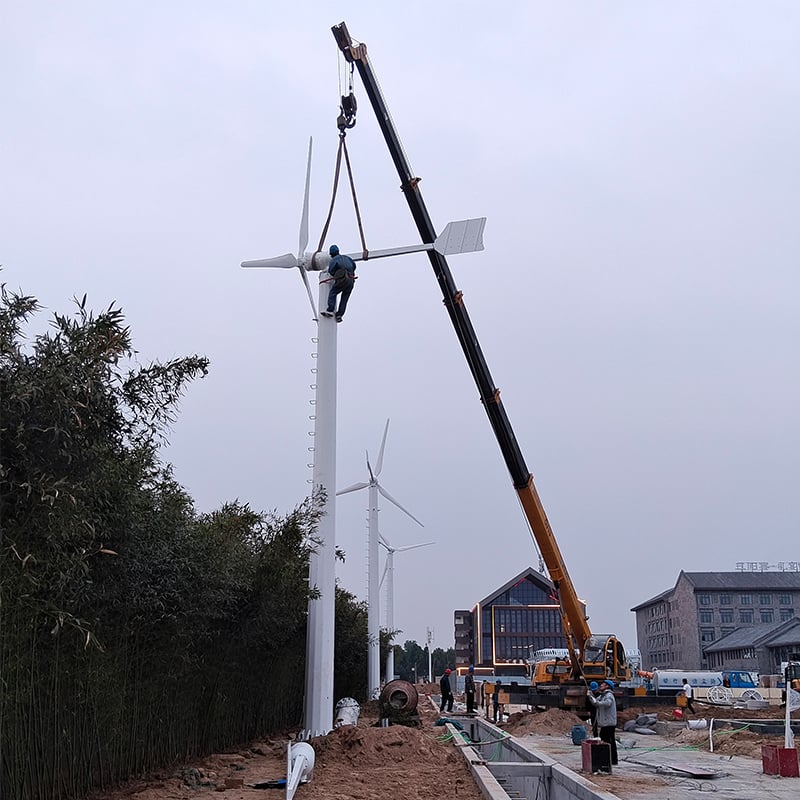
Jiangsu DHC Environmental Si-Tech Co., Ltd. utilizes these advanced heat pump technologies within full solution of renewable energy technologies and equipment which cover PVT solar panels, solar heat pump system and wind solar hybrid systems. DHC has 15 years of expertise in renewable energy, providing customized heating solutions for the European and American markets, ensuring that systems maintain excellent performance and strong adaptability under various environmental and weather conditions. Reliable performance of heat pumps systems on site with sophisticatedly efficient supply chain management is our promise. Welcome inquire DHC.