EN
EN

Water Turbine Generator Selection: Measuring Head and Flow Rate
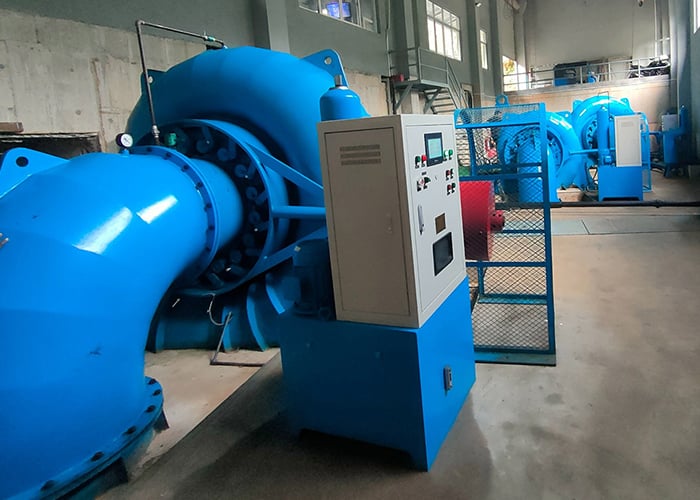
To determine whether a river is suitable for power generation and what scale of water turbine generator is appropriate, the first step is to measure two key data: water head and flow rate. These two data determine the power generation capacity and are the basis for water turbine generator selection and quotation.
The measurement does not require professional engineers; all that is needed is a mobile phone and a bucket.
Measuring Water Head
Water head refers to the vertical height difference between the inlet and the installation point of the water turbine generator. It is measured in meters. There are two types of water head: gross head and net head.
Gross head refers to the vertical drop between the upstream and downstream water levels, which is the theoretical total height difference; while net head refers to the actual usable drop of the water turbine generator. Due to the friction loss caused by the water flowing through the intake pipe (pressure pipe), the net water head is always slightly less than the gross water head. This is the basis for calculating the actual power generation.
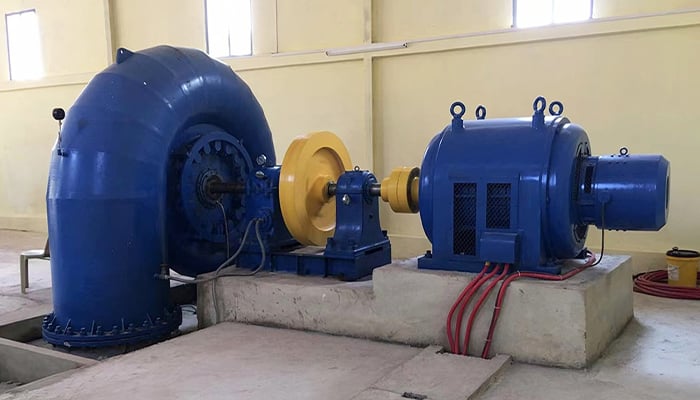
There are primarily three commonly used measurement methods:
Mobile Phone APP - Height Meter
Open the altitude measurement function on your mobile phone (iPhone can use the built-in "Compass" application; Android phones can download the free height meter application). Record the altitude at the predetermined intake point, then walk to the predetermined installation point of the hydro turbine and record again. The difference between the two readings is the water head height. This process only takes about two minutes. Taking multiple measurements and averaging them can reduce errors.
Pressure Gauge
If the water pipe has been installed, a pressure gauge can be installed at the end of the pipe. Close the valve to make the water flow in the pipe stop. The reading at this time corresponds to the gauge pressure. The conversion relationship is: 1 bar ≈ 10 meters of water head, 1 MPa ≈ 100 meters of water head. When the valve is open and the water turbine is running normally, the value displayed by the pressure gauge is the clean water head.
Level Gauge or GPS
If the on-site conditions permit, using a level gauge to measure the water level difference between the upstream and downstream is the most accurate method. Alternatively, a GPS device with elevation measurement function can also be used for measurement.
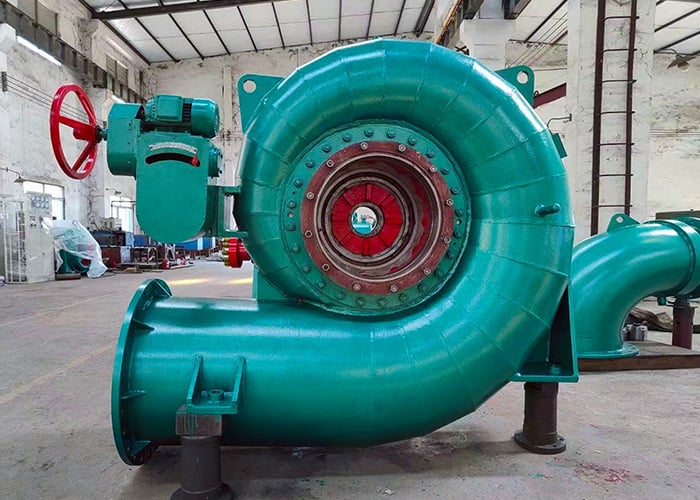
Measuring Flow
Flow refers to the volume of water flowing through in a unit of time, usually measured in cubic meters per second (m³/s) or liters per second (L/s). Only by knowing the flow rate can one make a better choice of the appropriate water turbine generator. Depending on the size of the water source, there are two practical measurement methods.
Bucket Method: Suitable for Small Flow Streams
For small flow, this is the simplest and most accurate method:
● Use stones or wooden boards to guide the water to a single outlet;
● Place a water bucket of known capacity below the outlet and use a mobile phone stopwatch to record the time it takes to fill the bucket;
● Flow = Bucket capacity / Time to fill (s).
For example, if a 20L bucket can be filled in 4 seconds, then the flow rate is 20 / 4 = 5L/s. It is important to note that multiple measurements should be taken and averaged to obtain a more accurate and reliable result.
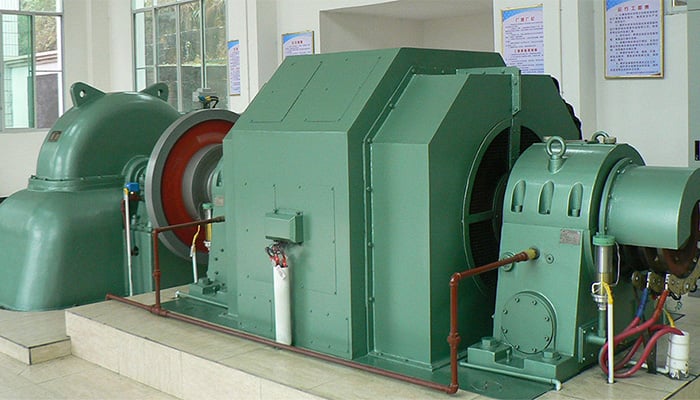
Cross-sectional Method: Applicable to Larger Water Flow Channels
When the flow rate is too high and it is inconvenient to use a bucket, the cross-sectional method can be used to measure the flow rate of water (And this situation is also quite suitable for using a larger water turbine generator.):
● Measure the cross-sectional area: Multiply the width of the channel by the water depth to obtain the area A (m²). If the shape of the channel is irregular and difficult to measure, it can be divided into several parts, measured separately, and then added together.
● Measure the flow velocity: Drop leaves or other floating objects into the water surface and record the time it takes for them to drift a certain distance (for example, 10m). Divide the distance by the time to obtain the flow velocity V (m/s).
● The formula for calculating the flow rate is: Q = Cross-sectional area A * Flow velocity V.
Similarly, multiple measurements should also be taken and averaged here.
After measuring the water head and flow, we can present the data to you, and we will match the most suitable water turbine generator for you.