EN
EN

Matching Selection of Generators and Electric Motors
Recently, a customer came to us. They are doing a processing factory project overseas. The local power grid capacity is not enough and the power supply is unstable. They need to bring their own generator set as the main power supply. The customer's biggest headache is that there are several electric motors in the factory, including crushers, fans and conveyor belts. They are worried that if the generator is small, it will not be delivered, and if it is large, it will be a waste of money. Ask me how to match the generator and the electric motor.
This problem is very common in industrial projects. The matching of generators and electric motors. If the generator is only matched according to the rated power of the electric motor, there will be a problem. The core reason is that the current shock at the moment the motor starts is much greater than the current during normal operation.
When the motor starts, it is necessary to overcome the rotational inertia of the rotor and the resistance of the load to accelerate from the stationary speed to the rated speed. In this process, the stator current of the motor will rise sharply. When the three-phase asynchronous motor is started directly, the starting current is usually 5 to 7 times the rated current. That is to say, the current requirement for the power supply of a 30kW motor can reach 150 to 210 amperes at the moment of direct start-up, and the corresponding power requirement is much higher than the rated power of the motor.
When the generator set is subjected to this impact, the key indicators are the transient voltage adjustment rate and recovery time. Under the impact of high current, the voltage at the generator end will drop instantly. If it falls too much or recovers too slowly, it will cause the contactor to be unstable, the protection device will misact, and the generator will be turned off directly. Therefore, the matching of generators and electric motors is essentially a balance between the transient power output capacity of the generator and the shock demand of the motor.
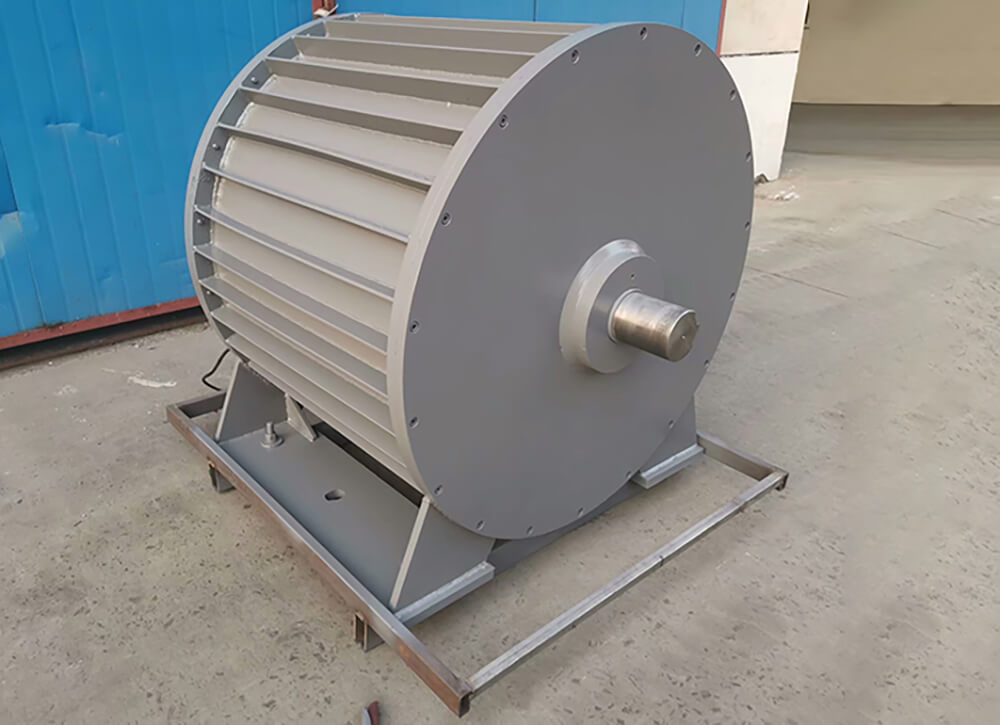
The starting method of the electric motor has the greatest impact on the selection of the generator.
The direct start-up shock is the largest and the starting current multiple is high, which is suitable for small-power motors or equipment with high requirements for starting torque. Using direct start, the generator power is usually 2.5 to 3.5 times the motor power. The specific multiple depends on the performance of the generator's excitation system. The transient response of the unit with permanent magnet excitation or digital excitation adjustment is better, and the multiple can be appropriately reduced.
Voltage reduction start is a commonly used method to reduce impact, including star triangle start, self-coupling transformer voltage reduction start, etc. The star triangle start-up can reduce the starting current to about one-third of the direct start-up, but the start-up torque is also reduced accordingly, which is suitable for no-load or light-load start-up devices. In this way, the generator power is generally configured at 1.5 to 2 times the motor power.
At present, soft starters are widely used. Through controllable silicon voltage regulation, the voltage can rise smoothly. The starting current can be controlled at 2 to 3 times the rated current. The start-up process is stable and the impact on the generator is small. When equipped with a soft starter, the power of the generator is 1.2 to 1.5 times the power of the motor.
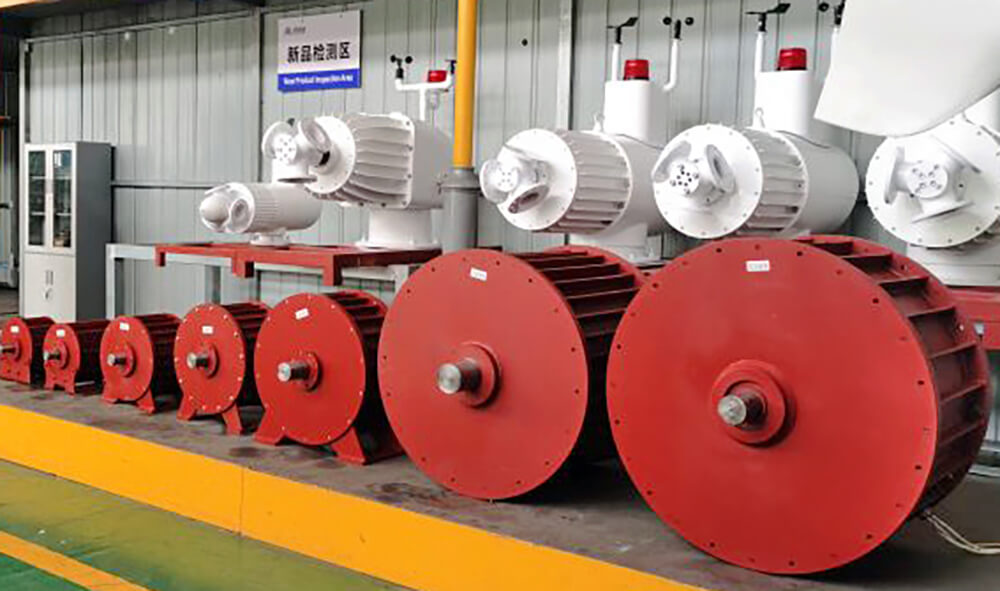
The frequency converter drive is the way to start the least impact. The starting current basically does not exceed the rated current of the motor, and there is almost no impact on the generator. However, as a nonlinear load, the frequency converter will produce harmonics. When selecting, it is necessary to pay attention to the AVR performance of the generator, and install a harmonic filter if necessary.
In addition to the start-up method, the nature of the load is also crucial. Heavy-load start-up equipment, such as air compressors, crushers and water pumps, carries a load during the start-up process, which has a greater impact than the empty-load start-up. In the case of multiple motors running at the same time, the power of each motor cannot be simply added together. It is necessary to consider the simultaneous operation coefficient and check the most unfavorable working conditions - such as the situation of multiple motors starting at the same time.
Environmental factors must also be included. For every 1,000 meters of altitude, the output power of the generator decreases by about 10%, because the thinness of the air affects heat dissipation and combustion. When the ambient temperature exceeds 40℃, the power also needs to be reduced. In special environments such as seaside and desert, the protection level and anti-corrosion level should also be improved accordingly.
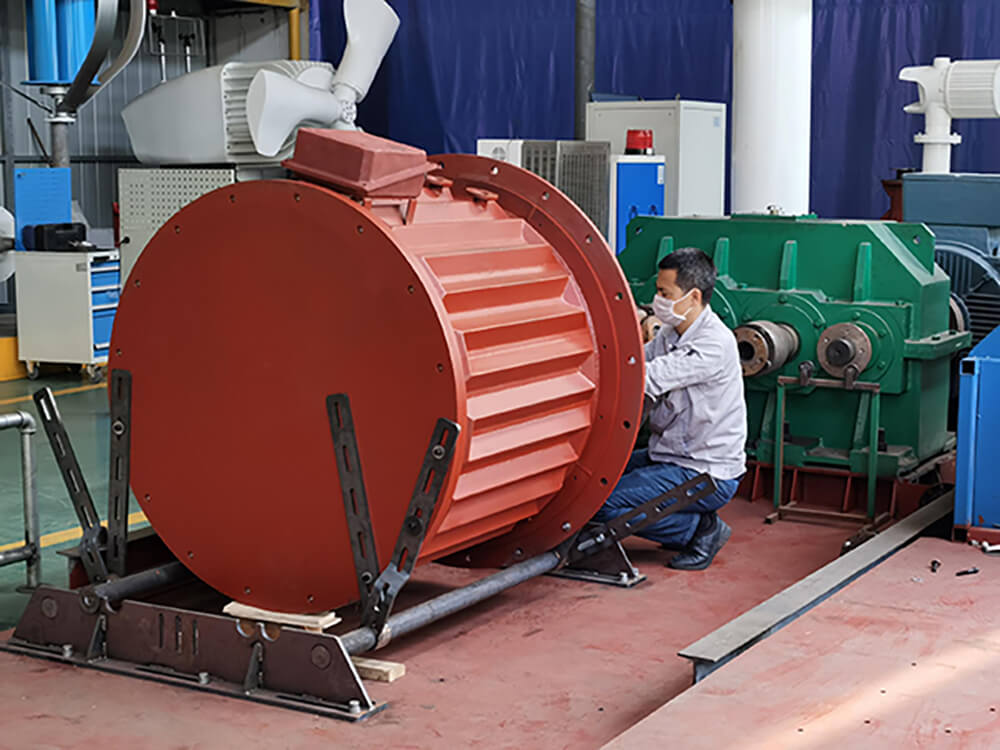
Back to the customer's processing factory, we helped him sort out: a 45kW crusher, heavy-load start, equipped with a frequency converter; a 22kW fan, no-load start, using a soft starter; and several small-power conveyor motors, start directly. At the same time, the operating coefficient is 0.8, considering the starting order under the most unfavorable working conditions, and finally equipped with a 120kW generator set with permanent magnet excitation and digital voltage regulation. Feedback from the customer after debugging that the equipment starts smoothly, the voltage fluctuation is within the acceptable range, and the operation is stable.
In general, the key to matching the generator and the motor is the accurate assessment of the starting impact of the motor and the reasonable matching of the transient response ability of the generator. Startup mode, load nature, environmental conditions, and multi-machine coordination are indispensable. If the selection is solid, there will be fewer problems on the spot.