EN
EN

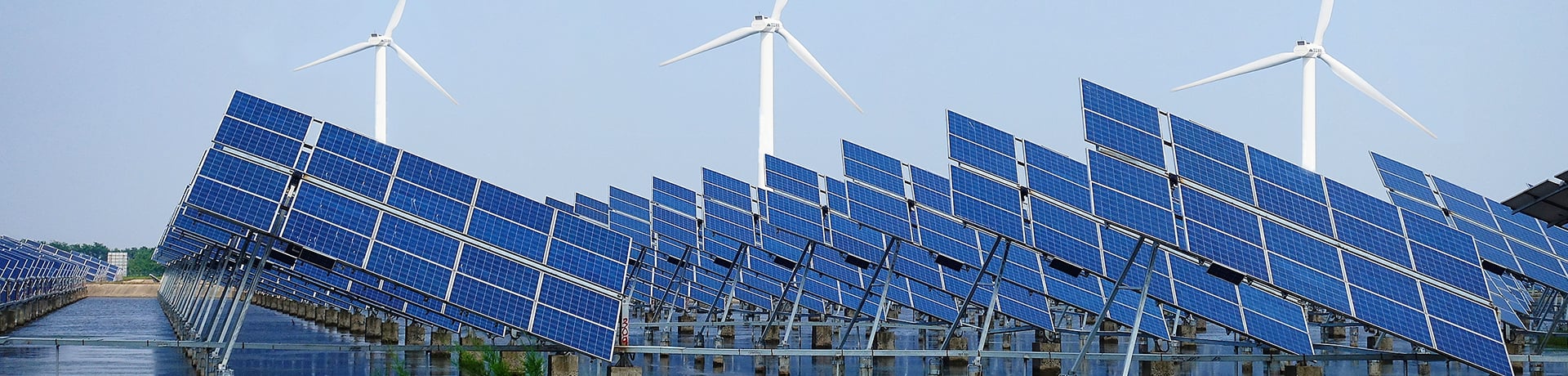
Case Study of a 140kW Wind Solar Hybrid System Solution in the UK
Customer Background and Requirements:
The customer is from the UK and is the owner of a furniture company. His factory has an extremely large electricity consumption, consuming 300 kwh per day. Currently, the customer already has a 40kw grid-connected solar panel system, but it is clear that this cannot meet the customer's electricity demand. The customer's current idea is to install wind turbines, solar panels, and energy storage batteries to form a wind solar hybrid system, which can achieve self-generation and self-consumption for most of the time. Even during long rainy seasons, it can also achieve using grid electricity at night for cheaper electricity and discharging electricity during the day.
Analysis
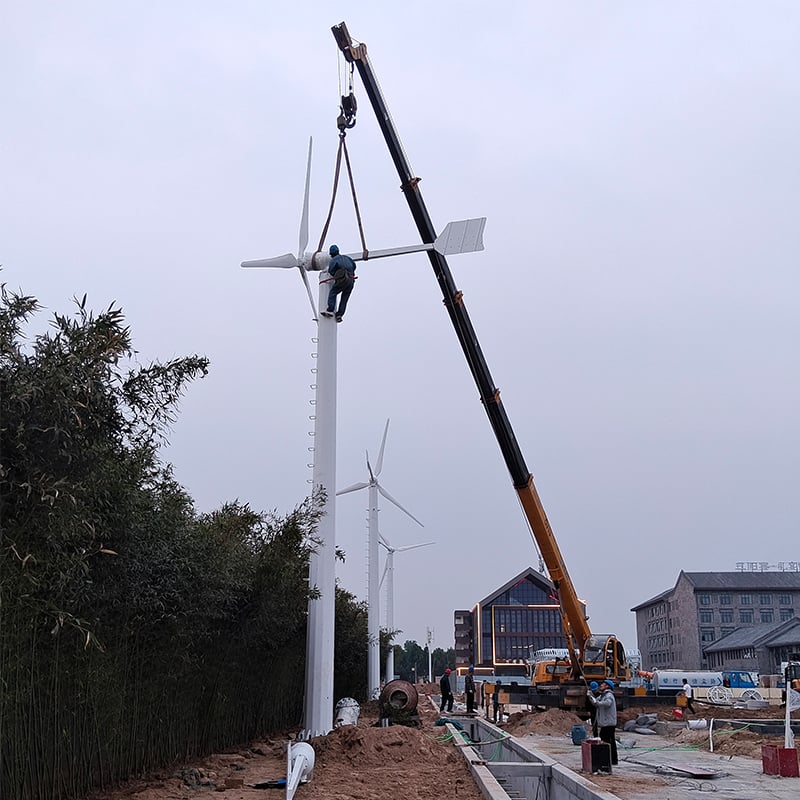
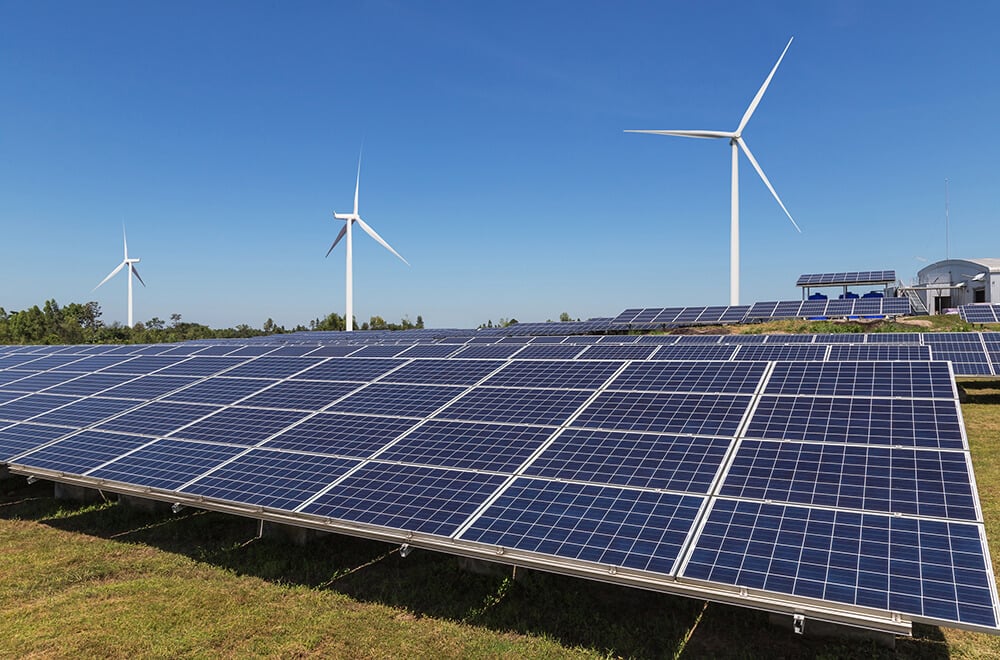
First, we checked the wind speed of the client at a height of 15 meters. The customer's average wind speed is 6.5 m/s, which is extremely suitable for wind turbines. This means that we can often operate at full power. Therefore, we recommend using a wind solar hybrid system. The 20kW DK wind turbine is expected to generate more than 150 kWh per day. Conservatively estimated, the current 40kw power generation system of the client generates 35000kwh of electricity per year. So the daily electricity generation is approximately 95kwh. Why is it so low? It is because in the UK, it rains for about 150 days a year, which results in insufficient daily electricity generation. Therefore, we need to discuss it categorically. When there is an existing 20kw wind turbine and sufficient sunlight, during the 8-hour working period during the day, the wind turbine and the 40kw solar panels are expected to provide 170kwh of energy. The remaining 130kwh of energy gap can be obtained from batteries or the grid. If it rains, then the 40kw solar panels basically cannot provide energy. The wind turbine can provide 40kwh of energy in 8 hours, so 260kwh of energy still needs to be obtained from batteries or the grid. If there is a special situation of both rain and no wind, then 300kwh of energy will all be obtained from batteries or the grid.
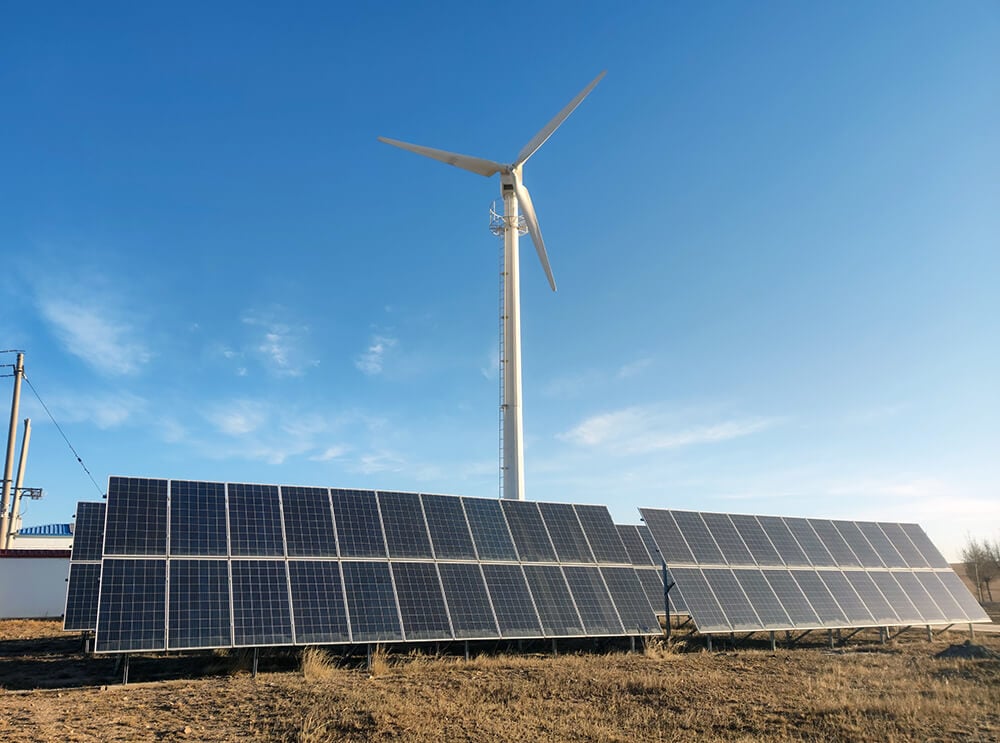
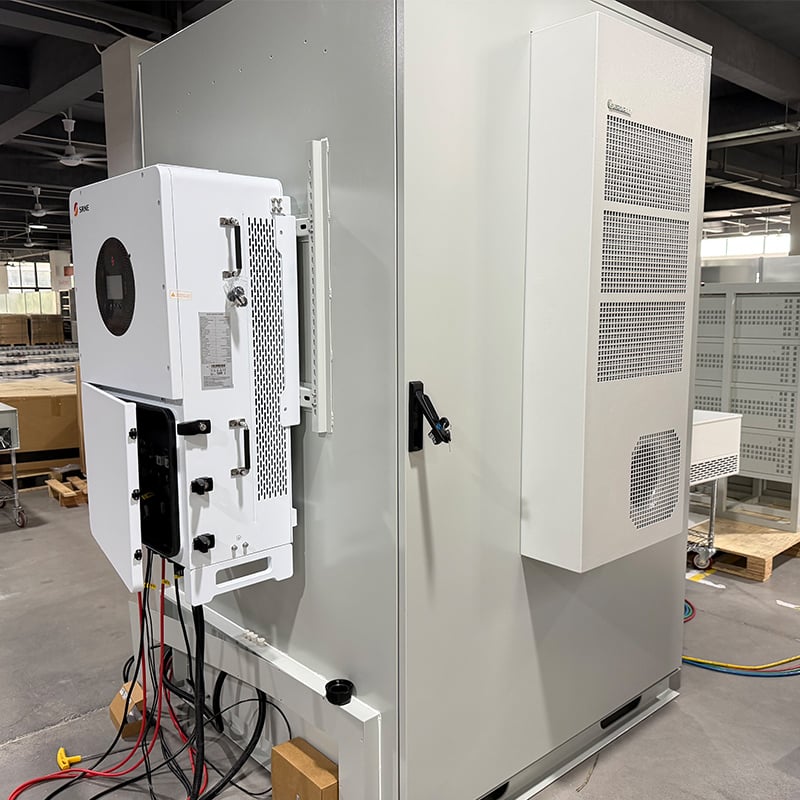
Considering that the discharge depth of the high-pressure battery is 95%, the battery capacity must be at least 315 kWh. The customer has already planned to purchase 2 sets of 240 kWh lithium batteries, so this battery capacity is sufficient. Then we need to calculate how to fully charge the 480 kWh battery under the condition of having sunlight, and minimize the probability of buying electricity from the grid as much as possible. The power generated by the wind turbine in 24 hours is approximately 150 kWh. So there is still 330 kWh of space. Adding the 300 kWh consumed in 8 hours, at least 120 kW of solar panels are needed, so an additional 80 kW of solar panels are also required.
The customer's average daily electricity consumption is 8 hours and 300 kWh. Considering factors such as inductive loads, the power of the inverter should be greater than 60 kW.

Solution
After the above analysis, our initial plan is to use a 140kw wind solar hybrid system: 20kw DK wind turbine, along with 120kw solar panels, two 240kwh batteries, and Solis' inverter S6-EH3P(75-125)K10-NV-YD-H. This inverter has 10 MPPT input ports, and one input port can handle a 20kw DC input. Therefore, our wind turbine controller can also be directly connected to this inverter.
The customer highly approved of this solution for the 140kw wind solar hybrid system. However, due to local regulations and the limitations of the installation location, the customer informed us that they also need a pure photovoltaic system solution as an alternative.
In the next phase, we can conduct calculations for a pure solar panel system.