EN
EN

Which Rivers are Suitable for Installing Water Turbines? How to Choose?
If there is a perennial flowing stream or river near your home, it is likely to be a potential home power station. Compared with solar and wind energy, the greatest advantage of hydropower is its stability: as long as there is water flow, it can generate electricity all day long, unaffected by the duration of sunlight and weather conditions. One investment can yield years of returns.
However, not every river is suitable for installing water turbines. Whether a water turbine can be installed, what size it can be, and which type to choose ultimately depend on two basic parameters.
The Two Factors Determining the Power Generation Capacity
Regardless of the brand or model, the power generation capacity of a water turbine basically depends on only two parameters:
Head: The vertical drop from the intake point to the installation point of the water turbine, measured in meters (m). The greater the drop, the higher the water pressure.
Flow: The volume of water passing through per unit time, measured in cubic meters per second (m³/s) or liters per second (L/s). 1 cubic meter per second = 1000 L/s.
The output power can be estimated using the following simplified formula:
Power (kW) ≈ 9.8 * Water Head (m) * Flow Rate (m³/s) * Efficiency
The efficiency is usually set at 0.6 - 0.7, which has taken into account the losses of the water turbine itself and the friction losses of the water pipe.
For example: with a water head of 20m and a flow rate of 0.05 cubic meters per second (50L/s). The estimated output power is approximately 9.8 * 20 * 0.05 * 0.65 ≈ 6.4 kilowatts, which is sufficient to meet the electricity demands of household lighting, refrigerators, televisions and water pumps.
As shown in the formula, if the water head or flow rate is too small, the output power will drop sharply. This is why even if the water flow speed seems fast, after calculation, it can only generate a few hundred watts of power.
Three Practical Cases
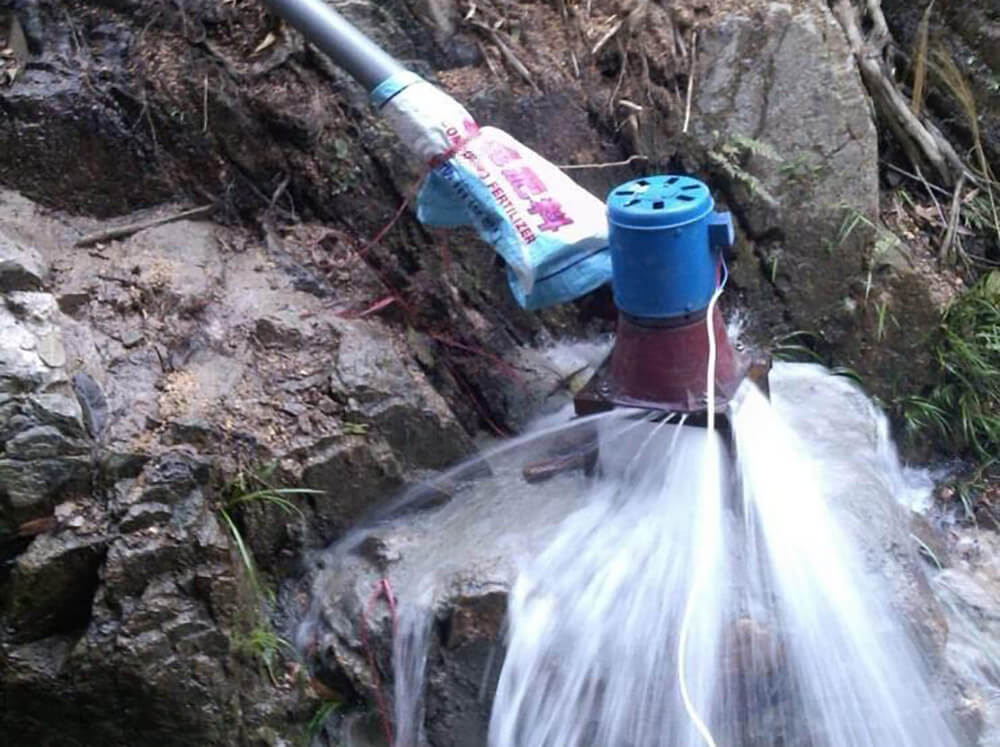
Today, we would like to share with you some actual solutions for our recent clients, to serve as a reference for you when choosing the water turbine.
1. Abundant Water Supply, But Narrow Pipeline
A customer approached us to inquire about a 5kw water turbine. He informed us that the water head was 30m. We still need actual data such as flow rate to provide him with a solution. After further inquiry, it was learned that he had already laid the water pipeline, using a DN50 pipe with an inner diameter of 50mm, but the measured flow rate was only 3L/s.
We used the calculation formula: 9.8 * 30 * 0.003 * 0.65, and calculated that the power was approximately 500w, which is only one-tenth of the 5kw he needed.
The limiting factor is not the water head, but the pipe diameter. The narrower the pipe, the faster the water flow speed, and the greater the friction loss along the length of the pipe, the lower the pressure when the water reaches the water turbine. This point is easily overlooked because the impressive water head data gives the impression that the output power has been guaranteed.
We offered him two options for selection: The first option was to install a larger-diameter pressure pipeline and re-evaluate the water intake point to increase the flow rate, thereby ensuring the power output required by the customer. However, this option would require dismantling the pipelines that the customer had already installed, and the construction workload would be relatively large. The other option was to select a micro water turbine with a power ranging from 500w to 1kw based on the existing site conditions and the already installed pipelines.
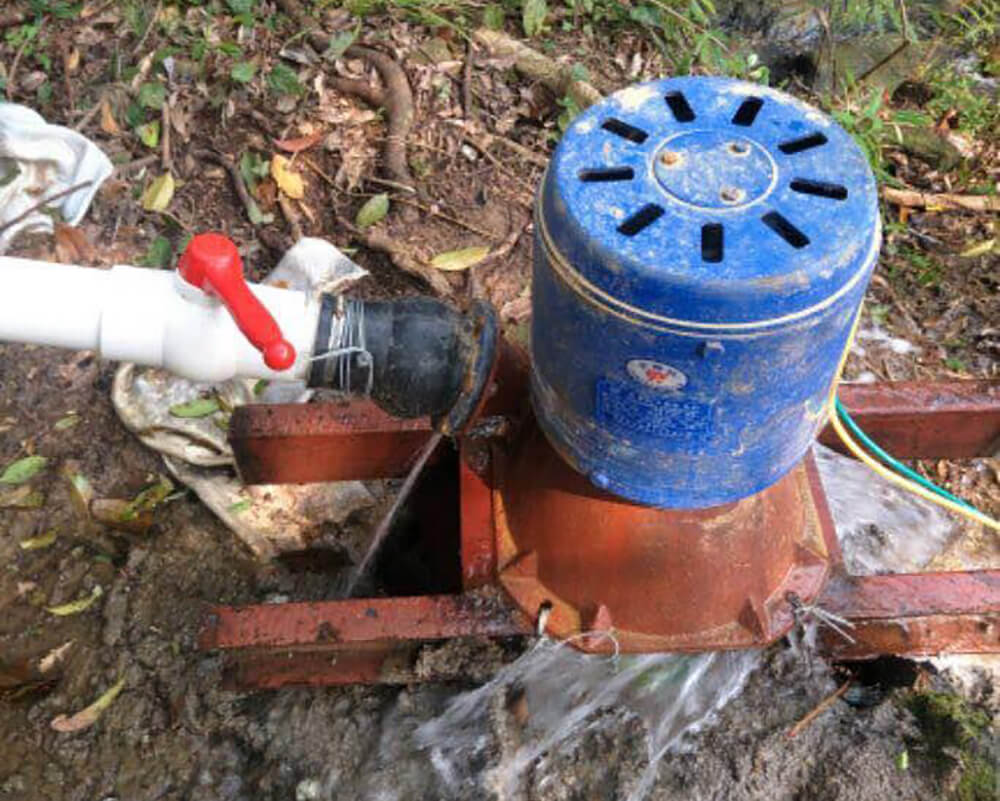
2. Medium Water Head, Water Turbine type Determines the Final Outcome
Another customer's inquiry was to use a water turbine to power residences and fish ponds. The target power was 10-15kw, three-phase, 50 hertz, and the site water head was 15m.
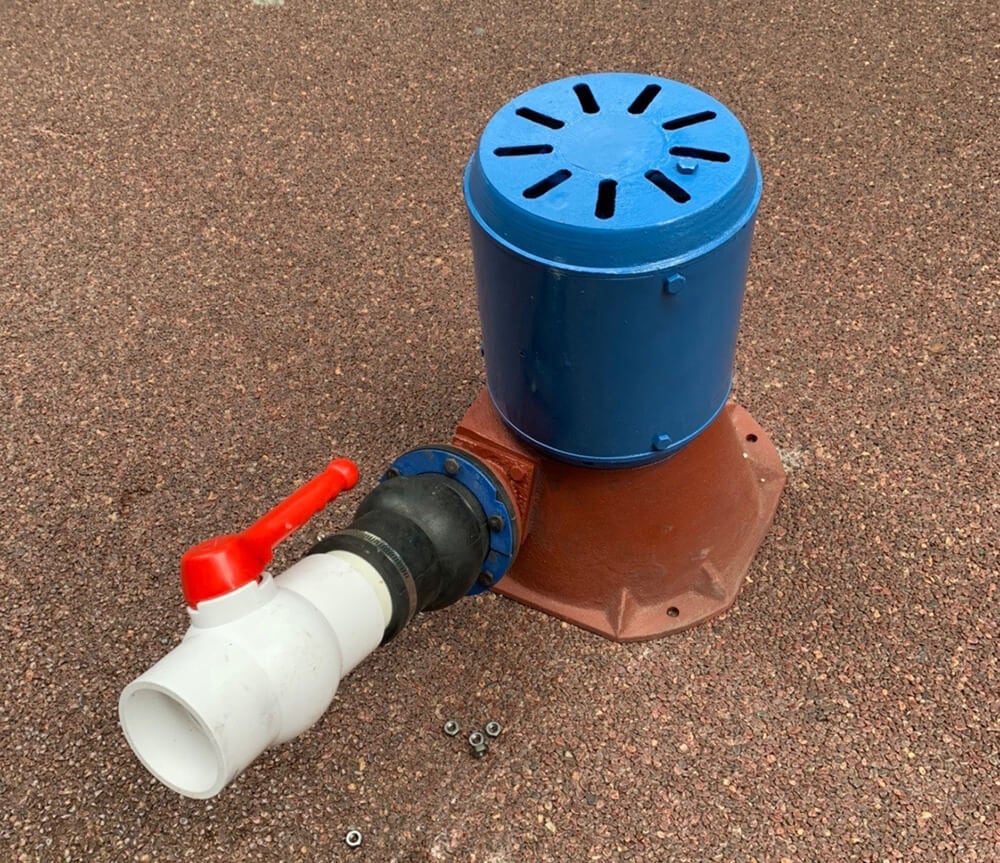
The customer initially inquired about the inclined water turbine unit. However, when we understood the customer's installation conditions, we discovered a problem: at a water head of 15m, the maximum power of the inclined turbine unit was 5kw, and at least a 30m water head was required for 10kw. The customer's installation site could not meet this requirement, so another type of water turbine had to be chosen.
The mixed-flow water turbine was very suitable for the customer's actual needs. The 10kw model was applicable to a water head range of 10 to 25m, and the recommended suction pipe diameter was 200mm, which almost perfectly matched his on-site conditions.
Therefore, the selection of the water turbine cannot be based solely on the rated power; it must first check the water head range corresponding to that rated power.
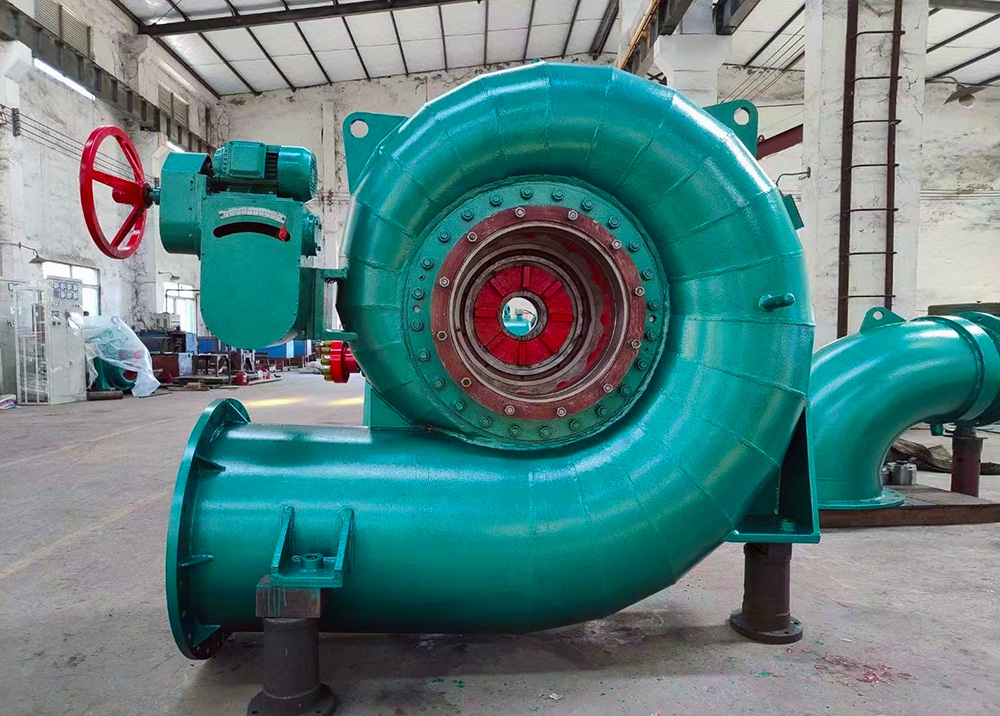
3. The Water Head is Close to Zero
The third customer described a small river flowing through his property. The water flowed slowly and with a very small drop. He asked if a water turbine could be installed. First, it is necessary to clarify the true meaning of "zero water head": Is there truly no water head, or is there a few centimeters of height difference that is just not noticeable? When walking along the river from the upstream to the downstream, one usually notices some height differences.
If the measurement results show that the drop is less than 0.5m and the flow rate is less than 0.5m/s, we usually do not recommend installing a water turbine, because installing an turbine that cannot achieve the expected output is not beneficial for either party. In this case, there are two feasible solutions: a small weir dam can be constructed to artificially create a small drop, which can create certain water head conditions. Another option is to understand the local sunlight conditions and consider switching to a solar system.
The first step in determining whether a river is suitable for power generation is always to measure the water head and flow rate. If you also want to utilize nearby streams or rivers for hydroelectric power planning, please feel free to contact us to obtain a customized solution.