EN
EN

A combination of renewable energy technologies is greater than the sum of its parts. Photovoltaic-thermal systems coupled to heat pump systems is among the most promising sustainable building energy supply hybrid solutions. Unlike conventional forms of solar heat or solar light transmission technologies, PVT technologies are able to capture both electricity and heat and the heat pump raises low grade thermal energy (heat) to a usable temperature. Combined, they create a strong duo, which is proven and tested in real installations worldwide.
How the Hybrid System Works
The PVT (Photovoltaic-Thermal) collector is the key element of this system, and consists of photovoltaic cells attached to a thermal absorber on the reverse side. The PV cells produce electricity when they are hit by the sun and the thermal absorber gathers the panels' discard heat and conveys it to a fluid that is circulated in a system. Two-in-one design of that product can solve the one of the fundamental shortcoming of conventional solar PV modules which are overheating. Under normal operating conditions of the PVT cooling system, this energy has been studied and it can be seen that the electrical efficiency significantly improved by the use of the PVT cooling system.
The harvested heat is then used as a low temperature heat source in a heat pump cycle, resulting in a smaller load being placed on the compressor. For many configurations the PVT generated thermal energy is a significant fraction of the heat input to the system. The liquid overfeed method, for instance, guarantees improved wetting of the walls and full exploitation of the surface available for heat exchange, this enables the compressor to suck in a higher density vapor and enhances the thermal and electrical performances. This effective combination of the two technologies makes it a closed circuit as waste heat is utilized as a resource.
Performance Metrics from Real Installations
The performance of PVT-heat pump hybrids is impressive, and real world data confirms this. For the greenhouse located at the real winter condition test-rig, the hybrid systems - 12 kW PVT solar collector fields and a variable speed 10 kW heat pump were studied in terms of thermal and electrical performances. The inside green house's temperature was stable 10C regardless of external temperature below -10.5 C through the whole winter, a quantity of heat supply of 11,253 kWh was provided. With almost no space's heating demand when during off season, the other of 11,125 kWh was stored and then transferred into the annual heating load, resulting a whole year heat supply is 22,378 kWh.
On the electrical side, the PVT system generated 3,839 kWh of electricity over the year, covering 36.72% of the total electricity consumed by the heat pump and auxiliary system. Seasonal coefficient of performance (CoP) of 3.38 the research showed PVT collector integration with heat pump in cold condition offers massive savings from energy consumption and dependency of conventional grid power.
In commercial building, the system with a PVT of 392 m² showed the heating COP between 5.8 and 6.3 in a typical week. The comprehensive system COP resulted up to 11.4, while the annual average COP was at 5.5. Payback period for the system was only 3.8 years. Another year round study shows that an average COP of 2.92 in winter, 3.69 in summer and 3.46 in transition seasons are found with PVT evaporator having average thermal efficiency 60.37% and total thermoelectric efficiency 70.12% for average months. This is for applying applications and for cost benefits.
Applications and Cost Benefits
Hybrid PVT-heat pump systems can be especially beneficial for sites where there is a high annual thermal demand, like swimming pools, laundromats and greenhouses. These systems can meet most if not all heating requirements and can cover many of the domestic appliance electrical requirements on this sized site when used as the 'primary' power for the solar. In the recent years, PVT-assisted Ground Source Heat Pump (PVT-GHPs) have been introduced which have been proved up to 20 per cent higher overall PVT exergy efficiency and 25.6 per cent lower peak temperature of PV panel.
The cost savings are not just in terms of energy consumption. In one commercial application, the system was found to have reduced annual soil heat storage temperature variation by only 0.4°C and a 3.8 year payback period. With increasing borehole spacing, the payback period has reduced by 18.8%. PVT installation with heat pumps have demonstrated a grid power savings of up to 70%, and consequently CO₂ emissions and lifecycle costs savings too!
Future Implications
The energy transition is at the threshold of us, building energy efficiency regulations are going to be enforced more strongly than ever and hybrid PVT-heat pump systems will be playing a critical part. The technology also demonstrates that renewable energy systems could be designed in such a a way that when working in combination systems performances would greatly exceed each of the components individually. The hybrid PVT-heat pump system is therefore an established, economical and environmentally beneficial solution for those contemplating investments in their premises toward energy sustainability.
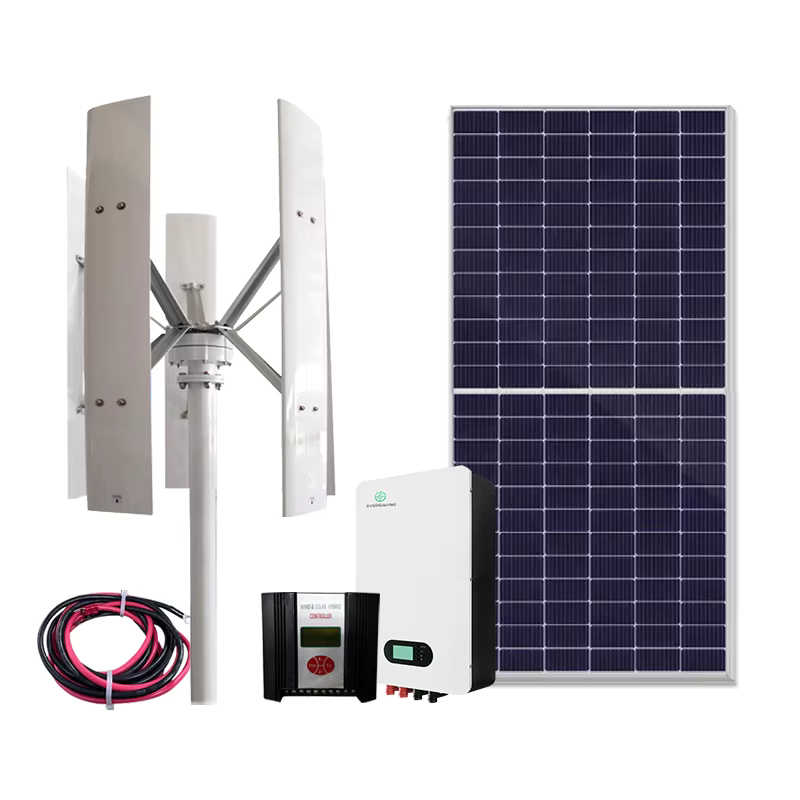
Founded in 2009 Jiangsu DHC Environmental Si-Tech Co., Ltd is working with green energy products. Based on the firm quality and services, the company is supplying all of the PVT solar modules, heat pumps, wind turbines and LiFePO₄ batteries to use in hybrid systems. Call us now to learn how our solutions reduce your operating cost and give you energy independence.